
Transcranial Electrical Stimulation (TES)
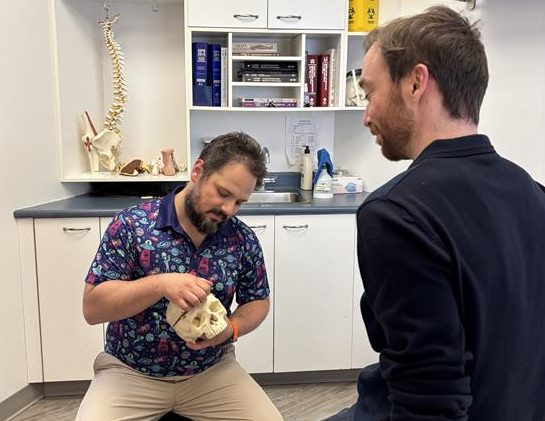
Therapists
Vincent Adams
Émilie Lefrançois
Modality Overview
In the brain, neurons are active through electrical discharges and communicate with one another via synapses. Connections between neurons adapt and change over time. Various conditions or injuries can affect neuronal activity and their connections. Transcranial electrical stimulation alters neuronal activity to synchronize, stimulate, or calm specific areas of the brain.
Transcranial electrical stimulation is a non-invasive technique where two electrodes are placed on the scalp. The electrodes deliver a low electrical current to the brain. Three types of currents may be used during a transcranial electrical stimulation treatment. Direct current alters the excitability of brain regions, alternating current helps synchronize neurons, and random noise stimulation increases plasticity and the efficiency of neuronal connections. Our device uses direct current.
During a transcranial electrical stimulation appointment, you can expect to discuss your treatment goals, symptoms, and more with your therapist. Afterwards, your therapist will set up the transcranial stimulation device on your head. You will likely feel a tingling or warm sensation on your scalp when the current is activated. You may then relax or perform cognitive tasks as recommended by your therapist.
Indications and Situations Where the Modality May Be Beneficial
Each type of electrical current has unique properties that are advantageous for different conditions.
Firstly, transcranial electrical stimulation may promote brain plasticity and motor learning. Several studies have shown improvement in motor functions in post-stroke conditions (Stagg, 2012), Parkinson’s disease (Alon, 2012), and cerebral palsy (Liu, 2021).
Secondly, transcranial electrical stimulation can help manage chronic pain by modifying the brain’s pain circuits (Antal, 2010). Decreased pain perception has also been observed in conditions such as fibromyalgia (Antal, 2010), neuropathic pain (Antal, 2010), and chronic migraines (Rocha, 2015).
Lastly, transcranial electrical stimulation can optimize cognitive and motor performance. It may improve focus and memory during rehabilitation following traumatic brain injury (Cordeiro, 2023) and support memory and executive functions in neurodegenerative disorders such as Alzheimer’s disease (Khedr, 2019).
Contraindications
-
- Metal or electronic implants in the skull
- History of epilepsy, seizures, or fainting
- Lesions or infections on the scalp
- Diseases that caused brain damage (aneurysm, tumor, etc.)
- Active intracranial pathology
- Pregnancy
- Severe head trauma with loss of consciousness
- Pacemaker or defibrillator
- Eczema on the scalp
- Ocular or cochlear implants
Partner in your health and performances !